Change Management and Training
A technically excellent AI system still fails if people don't trust it or don't know how to use it. Adoption is a people problem at least as much as an engineering one. The architect who ignores change management ships a tool that sits unused; the one who plans for it ships a tool that becomes part of how the organization works.
Enable the developers first
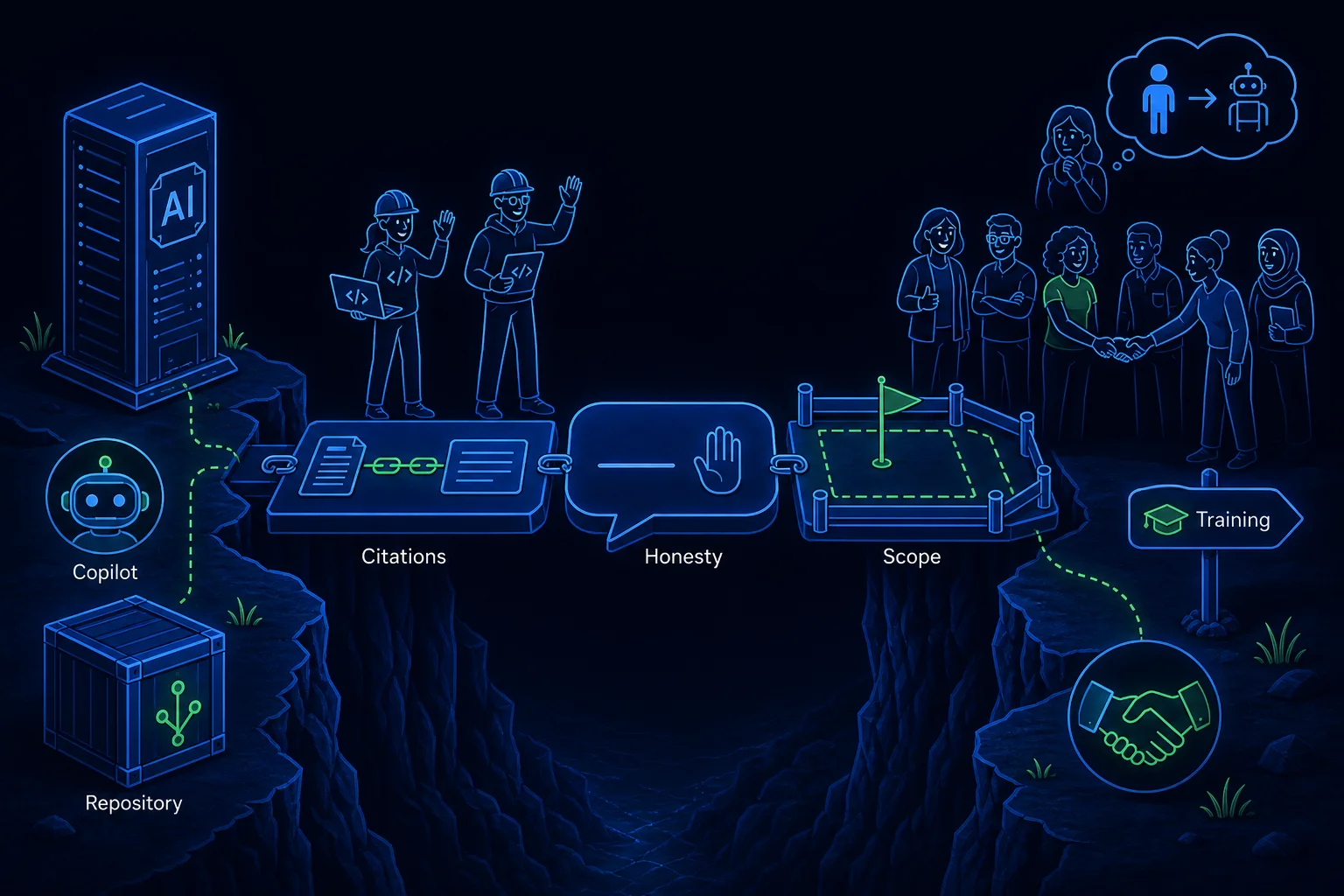
Engineers are both the builders and the earliest adopters, so start the cultural shift with them. Developer enablement means giving teams AI tools and the repositories to use them well:
- AI coding assistants like GitHub Copilot accelerate the everyday work of building and maintaining the platform, and let engineers experience the technology's strengths and limits firsthand.
- AI-ready repositories — clear structure, good documentation, descriptive naming — make both the assistants and the humans more effective. A repo that an AI tool can navigate is usually one a new engineer can navigate too.
- Shared assets like a common RAG library mean each team builds on proven patterns instead of relearning the same lessons.
Developers who trust the tools they build with become credible advocates to the rest of the organization.
Build trust through transparency
End users extend trust slowly, and rightly so. The most powerful trust-builder is showing the work:
- Citations. When an answer links back to the source document, users can verify it themselves. A cited answer invites scrutiny; an uncited one demands blind faith.
- Honest uncertainty. A system that says "I don't have a source for that" earns more trust than one that confidently invents an answer. Design for graceful refusal, not false confidence.
- Visible boundaries. Tell users what the tool is for and what it isn't. Clear scope prevents the disappointment that comes from misplaced expectations.
Transparency is not a UI nicety — it is the mechanism by which an organization decides the tool is safe to rely on.
Address staff fear honestly
Behind every adoption effort is a quieter question staff are asking themselves: is this here to replace me? Pretending the fear doesn't exist guarantees resistance. Address it directly:
- Frame AI as augmentation — removing the tedious parts of a job (searching, summarizing, drafting) so people can spend time on judgment and relationships.
- Involve affected staff in choosing and shaping use cases. People support what they help build.
- Invest in training that meets users where they are, and be candid about what the tool can't do. Over-promising erodes the very trust you are trying to build.
Handled openly, change management turns a threatening new system into a welcomed one.